How natural light shapes our perception of space and influences our emotional well-being in modern homes.
Architecture has long understood that thoughtful design is not merely a functional requirement but a medium — as expressive as stone, timber, or steel. The most enduring spaces are those that speak to human experience while simultaneously pushing the discipline forward.
The Principles Behind the Practice
Our approach begins with a deep listening phase. Before a single line is drawn, we immerse ourselves in the site, the brief, and the lives of those who will inhabit the space. This attentiveness to context is the hallmark of every project that carries the Arclight name — each one a careful calibration of form, material, light, and landscape.
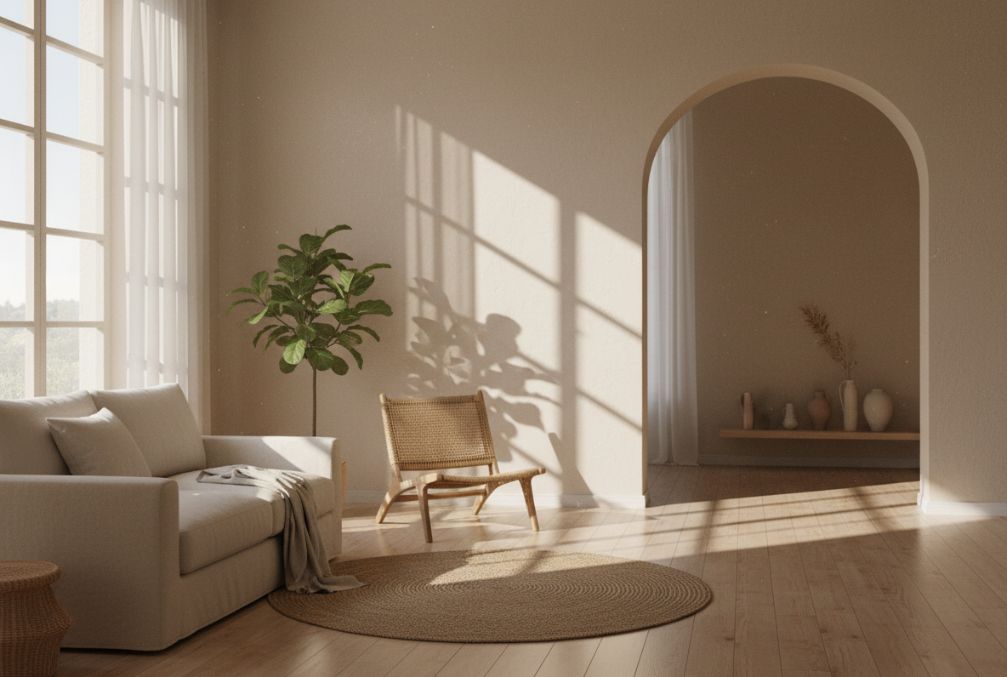
Detail study — materiality and light at play
Substance Beyond Surface
True architectural richness is never superficial. It emerges from the interplay of structure and light, of mass and void, of roughness and refinement. When these forces are held in tension with intelligence and care, the result is a space that goes beyond aesthetics — one that shapes how we feel, think, and live within it. This is the standard we hold ourselves to in every project, at every scale.


